
In the Times-News: The Largest Barrier Is Finding the Food
October 29, 2026
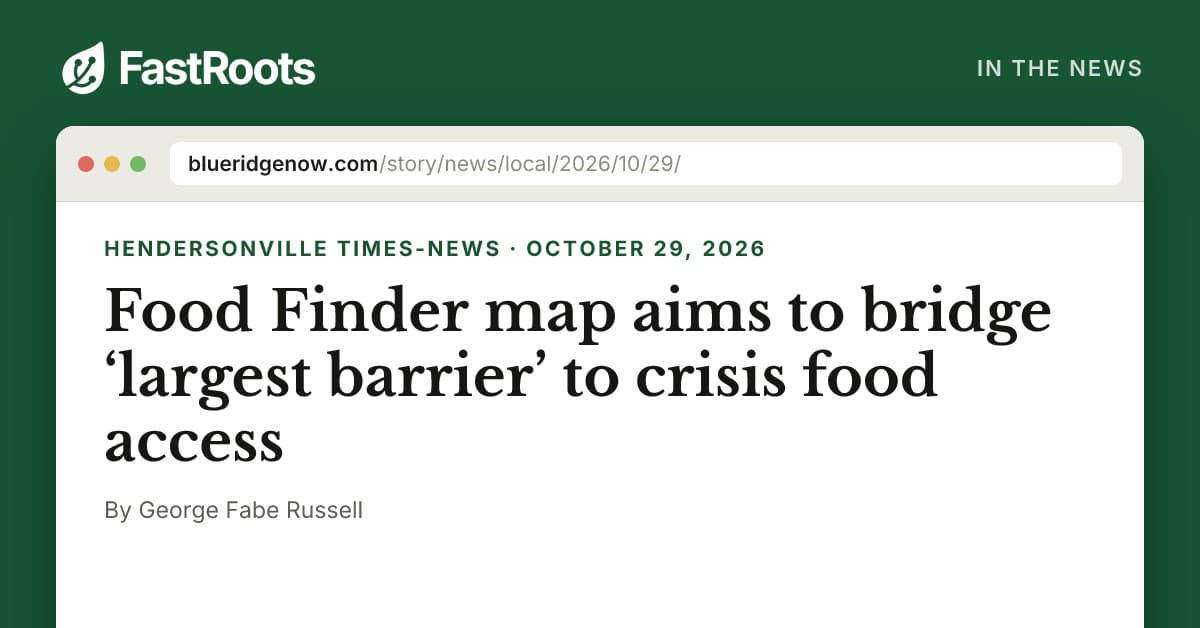
The Henderson County Food Finder was in the paper. George Fabe Russell of the Hendersonville Times-News covered it on October 29, 2026, and the story was picked up by Yahoo News. Read the article: Food Finder map aims to bridge 'largest barrier' to crisis food access.
On October 28, Kris Merritt, senior program officer at the Community Foundation of Henderson County, stood in front of Hendersonville City Council and explained the Henderson County Food Finder in one sentence. The Times-News put it in the headline, and it is the best short description of the project anyone has given:
The largest barrier for people to access those food services is finding them.
That is the whole premise. Henderson County does not lack people feeding their neighbors. The map lists more than 40 of them: pantries, community meals, self-serve boxes, and places that also help with clothing, personal care items, rent, utilities and prescriptions. What the county lacked was one place that says who is open, when, and for whom, and that is still right next month.
What the article gets right
The reporter noticed the thing that makes this hard. Many of these programs are run by churches and small groups with no paid staff and no communications person. Hours change. A printed list is out of date within weeks of leaving the copier.
The article describes the map as updated in real time. The precise version is a little less magic and a little more work. A change made in the back office shows up on the public map within about a minute. What makes that change happen is a person: every listing was confirmed through a direct conversation with the people who run it, and listings are re-verified on a recurring schedule. The software is the easy part. The phone calls are the product.
The article also mentions the side of the map most neighbors will never see. Behind the public Food Finder is a view for the Foundation and its partners that lays census-tract data under the same providers, so the question can shift from "where is food?" to "where is need high and help thin?"
The best question in the room
Council Member Melinda Lowrance asked what happens to people who do not have internet access. It is the right question, and Merritt answered it honestly: being online is a barrier for some people, and libraries and caseworkers are how the gap gets bridged.
That matches how the map was designed. When it launched in September, the Foundation described it as a tool for neighbors and, just as much, for the people neighbors already ask: case managers, school counselors, church staff, hospital discharge planners and librarians. A person without a phone can still be helped by someone who has the map open. The helper no longer has to answer from memory.
Why it matters that the Foundation told this story
FastRoots builds and maintains the Food Finder, but nobody from FastRoots was at the podium, and that is how it should be. The map belongs to the community that keeps it true. A program officer explaining it to her own city council, in her own words, to officials who see their neighbors posting about shortages, is what a local resource looks like when it is working.
Our thanks to the Times-News for the coverage, and to the Community Foundation of Henderson County for carrying the map into the rooms where it can do the most good.
The Food Finder is free and open to everyone at hcfoodfinder.org. If you want to see what a living map could look like for your region, start here.